Among the several unfamiliar (to me) British expressions used in Justin Peters’ Slate piece (discussed below) was one used by Janet Maslin yesterday in her New York Times review of the memoirs of Rod Stewart, CBE:
“Mr. Stewart’s antics have earned him a richly deserved Jack the Lad reputation.”
In considering the expression, the OED suggests that the reader should “perhaps compare the expression Jack’s the Lad, found in a nautical song,” which it dates from the 1840s and from which it quotes this line: “For if ever fellow took delight in swigging, gigging, kissing, drinking, fighting, Damme I’ll be bold to say that Jack’s the lad.” The definition: “a conspicuously self-assured, carefree, and often brash young man; a ‘chancer’.”
Sounds about right for our Rodney Roderick (except for the “young” bit).
Great piece in Slate by Justin Peters, who decided to try out as many as he could of the bizarre trends sanctified by the New York Times Style section. He managed to do seven of them, including wearing his hair in a man bun, shaving his pubic hair, and, yes, filling his vocabulary with Britishisms. Peters writes:
“What’s up?” “You the man.” “Take it easy.” I use these slang phrases all the time, which is one of the top five reasons I’ve never been invited back to the Yale Club. According to theTimes, British slang is the only slang that a trendy American ought to use: “Snippets of British vernacular—‘cheers’ as a thank you, ‘brilliant’ as an affirmative, ‘loo’ as a bathroom—that were until recently as rare as steak and kidney pie on these shores are cropping up in the daily speech of Americans (particularly, New Yorkers) of the taste-making set who often have no more direct tie to Britain than an affinity for Downton Abbey,” the NYT’s Alex Williams writes.
I was in England earlier this year, and though I spent most of my time being jetlagged and avoiding their hideous breakfasts, I did pick up some slang—words like lorry, as in “I would rather be hit by a lorry than eat another English breakfast.” So I figured this would be easy. I boned up on my Britishisms by rereading Brideshead Revisited and consulting the Wikipedia entry on British slang. When Hurricane Sandy knocked out the electricity, I couldn’t hold it in any longer. “Well, this is all to cock!” I cried.
“Your cock?” my wife said
“No, no, it’s all to cock!”
“Alter cock?”
“It’s. All. To. Cock!” I said again, gesturing emphatically.
@PeterSokolowsi of Merriam-Webster reports on Twitter that gallimaufry is, at this moment, the most looked-up word at the company’s website. Why? Because the New York Times’ Maureen Dowd used it in her column yesterday: “Just like the Bushes before him, Romney tried to portray himself as more American than his Democratic opponent. But America’s gallimaufry wasn’t knuckling under to the gentry this time.”
(Dowd NOOBed in her opening line: “It makes sense that Mitt Romney and his advisers are still gobsmacked by the fact that they’re not commandeering the West Wing.”)
The OED’s first meaning for gallimaufry (which is spelled various ways) is culinary, referring to a stew or ragout with various ingredients, but as early as 1551 it took on the meaning “A heterogeneous mixture, a confused jumble, a ridiculous medley,” which is how Dowd uses it, though with a more positive spin than the definition suggests.
A Google Ngram reveals that, except for a puzzling period between about 1875 and 1885, the word has historically been used more in Britain (red line) than the U.S. (blue line):
But I wouldn’t exactly call it a Britishism, Not One-Off or otherwise. It’s just that columnists need to say things in colorful ways, and Dowd is about as colorful as they come.
Faithful reader Cameron directed me to a quotation from an article on MLB.com by Anthony Castrovince (the MLB standing for Major League Baseball):
“Wakefield was a dependable eater of innings who annoyed opponents — not just on the days he pitched, but the day after, for a knuckleballer serves as quite the spanner in the works.”
(Translation, for non-American readers: Tim Wakefield is a pitcher who specializes in a rather unusual, fluttering pitch called the knuckleball. Wakefield himself, while he doesn’t produce spectacular results, has the ability to get his team fairly deep in the game without giving up too many runs: that is, “eat innings.” It is a general truth that, if a team faces a knuckleballer one day, its batters don’t do very well against a conventional pitcher the next day.)
I categorize spanner, meaning wrench (the tool) as a Doobious NOOB–that is, it is never found here–and spanner in the works as an outlier. The OED finds the first use of the latter in P.G. Wodehouse’s 1934 Right Ho, Jeeves: “He should have had sense enough to see that he was throwing a spanner into the works.”
I believe the expression will never achieve wide circulation here–will be used only, as Mr. Castrovince does, as a self-conscious exoticism–because we have a synonymous and, arguably, more adaptable and expressive counterpart: throw a monkey wrench in or into, which can be followed by works, plans, operation, or anything else. The OED reports a use of this by the Chicago Tribune back in 1907: “It should look to them as if he were throwing a monkeywrench into the only market by visiting that Cincinnati circus upon the devoted heads of Kentucky’s best customers.”
When Cameron brought up spanner in the works, it rang a vague bell, originating, I realized, in the title of a 1995 Rod Stewart album. I’d never known what this meant, and so categorized it with similarly mystifying British record names, like “Tea for the Tillerman,” “John Barleycorn Is Dead,” and “Thick as a Brick.” When I mentioned the expression to my wife, she reminded me that John Lennon’s 1965 book was titled A Spaniard in the Works. I had never before gotten the play on words. Good one, John.
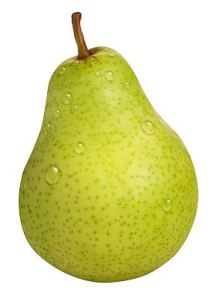
Reader Priscilla Jensen alerts me to this from the November 7 Wall Street Journal: “But [Barack Obama’s] opportunity will quickly go pear-shaped if the bond market loses confidence . . . ”
Unfamiliar with this metaphorical pear-shaped, I went to the OED and was informed that the expression, usually preceded by to go or to turn, is chiefly British and originally RAF slang, and means “to go (badly) wrong, to go awry.” The dictionary offers no etymological explanation as to why the metaphor would have this meaning, and I would be interested in any thoughts on the matter. In any event, the first citation is from a 1983 book called Air War South Atlantic and has telltale quotation marks: “There were two bangs very close together. The whole aircraft shook and things went ‘pear-shaped’ very quickly after that.
The first use of go pear-shaped or went pear-shaped in the Lexis-Nexis database of U.S. newspapers is a 1999 New York Observer column by Phillip Weiss about the Clinton impeachment hearings. He writes:
Eve MacSweeney, an editor at Harper’s Bazaar, sends me an e-mail that says, “couldn’t e you back from england as friend in hospital and everything went pear-shaped.” I call to ask about the phrase. She tells me that “pear-shaped” is the reigning metaphor in England now. Things are going pear-shaped. They say it in the financial district when a stock goes bad. They say it in W11 about a marriage. Ms. MacSweeney says the term resonates because English women are frequently referred to as being pear-shaped, the men in England being buttless, but she and I agree that when the phrase gets here — the land of the aging, big-butted male — it will have wider resonance.
(Weiss’s subsequent aside is relevant to this blog: “I think of when that other Anglicism, ‘at the end of the day,’ came here a few years ago, landing in New York. The House managers use the phrase ‘at the end of the day’ over and over again, summing up their case on the Senate floor. Now we know what the end of the day looks like.” I find, to my shock, that on this blog I have never looked in to at the end of the day. I imagine that’s because, even when I started NOOBs, it was already such a dispiriting cliche on both sides of the Atlantic that I couldn’t bear to write it down several times in a blog post. But I digress.)
The next one Lexis-Nexis hit comes in in 2001, when a reporter for the University of Massachusetts student newspaper wrote, referring to a soccer player’s injury, “That is when it all went pear-shaped.” The phrase pops up now and then in the early and mid-2000s, but really took hold around 2009. There are twenty-eight Lexis-Nexis hits through 2008 and twenty-nine since then, including the testimony of James Grant, editor of “Grant’s Interest Rate Observer,” to the House of Representatives in September 2012: “Nowadays, when things go pear-shaped, Chairman Bernanke is front and center with broad hints to print enough money or suppress enough prices or inflate enough assets to make us forget our troubles.”
Now go pear-shaped seems to be fully established, especially in financial and, for some reason, sporting circles. But does it truly resonated in this land of the aging, big-butted male? The jury is still out on that one.
“This book’s footnotes are whatever the opposite of scholarly is, many of them completely daft.”–Dwight Garner, New York Times, November 6, 2012, review of “Bruce [Springsteen],” by Peter Ames Carlin
Listening to Geoffrey Nunberg’s “Fresh Air” commentary about not one-off Britishisms, I was struck by this: ” … when [the British] do send us an occasional blockbuster like Harry Potter, they’re considerate enough to Americanize ‘dustbin’ to ‘trash can’ and ‘pinny’ to ‘apron.'”
The reason I was struck is that, about fifteen years ago, shortly after we moved to a town in suburban Philadelphia, my older daughter, Elizabeth Yagoda, started to play soccer. When her team practiced, the girls on one side would put loose mesh jerseys–all of the same color–over their shirts. These were referred to as pinnies. Or at least that’s what I thought they were referred to as; the other possibility was some Southern-derived pronunciation of pennies. I had never heard the term before.
The mystery has persisted, till Nunberg’s comment inspired me to investigate. The OED’s definition of pinny is “A pinafore; an apron, esp. one with a bib.” The dictionary cites a 1939 Angela Thirkell novel: “If we had known mummie was coming, we’d have had our clean pinny on.”
Current British usage uniformly favors the apron meaning, as in this 2010 quote from The People about the Beckham family: “I can reveal Posh, 36, will be putting her pinny on to cook for the couple’s parents including Dave’s dad Ted, who has previously been shunned from the family’s festivities.” That meaning has not penetrated the U.S.
And what about the athletic usage? Wikipedia is of some help:
In modern times, the term “pinny” or “pinnie” has taken another meaning in sports wear, namely a double-sided short apron, often made of mesh, used to differentiate teams. This usage is chiefly British, with some usage in Canada and the United States. This type of pinny is also known as a scrimmage vest.[citation needed]
Citation needed indeed. I haven’t been able to find any British use–and would appreciate any reader input–but pinny appears to have been used to denote “scrimmage jersey” in the U.S. by the early 1950s. Renata Adler (born: 1938) writes in her 1976 novel, Speedboat, “It is all gone, after childhood knowledge of myths, constellations, baseball scores, dinosaurs, and idioms of the tennis court and athletic field. There are outcroppings of the old vocabularies still. Pinnies from field hockey. Heels down. Bad hop. Sorry. My fault. So sorry.”
And there is this in a 1951 publication called “Developing Democratic Human Relations” (the passage is apparently a list of guidelines for scholastic sports): “7. Short cuts to efficient organization for intramural programs (developed through the democratic process): a. Schedule for field and courts with the games schedule. b. Previous knowledge of pinny or shirt teams and direction of goal or basket…”
Today, the word is out there in America, but not completely familiar, as evidenced by way the singular is sometimes spelled pinny and sometimes pinnie, by the quotation marks in this 2012 New York Times blog post–“Children trade or alter clothing; they wear it in situations for which it wasn’t intended (a sports bra under a “pinnie”: perfect for lacrosse, less so in the classroom)”–and by the definition provided in this one, about a pickup soccer game:
“Sides of six to nine are assembled from players serendipitously wearing like-colored tops; noncoordinated participants, mostly men but some women, team up and wear borrowed practice pinnies (mesh vests).”
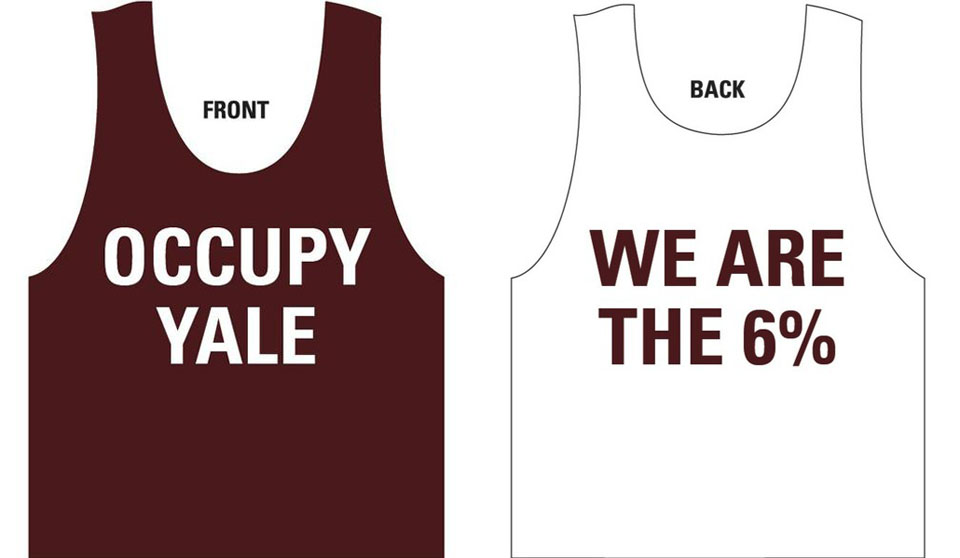
Almost precisely a year ago, ahead of the Harvard-Yale (American) football match–known in those parts as The Game–the Yale Daily News published this item:
In a clear demonstration that Harvard students measure their “superiority” by their university’s single-digit acceptance rate and their pinnies, a group of Harvard entrepreneurs have launched an “#OccupyYale” pinny — prominently displaying the school’s 6.2% admissions rate — for Cantabs to wear at The Game this weekend.
Pinny for your thoughts: typical Harvard arrogance
Linguist Geoffrey Nunberg weighed in on NOOBs a couple of days ago on the public radio program “Fresh Air,” graciously crediting this blog. He had a nice metaphor for the whole phenomenon: “Adding a foreign word to your vocabulary is like adding foreign attire to your wardrobe. Sometimes you do it because it’s practical and sometimes just because you think it looks cool.”
…other words are imported just for effect. “I’m not very keen on it, but I’ll have a go.” People claim to discern some useful nuances of meaning there, but who are they kidding? It’s like explaining that you bought that $800 Burberry plaid tote bag because it gives you a better grade of vinyl.
And Nunberg had a good innings on the difference between Not One-Off Britishisms in the U.S. and Not One-Off Americans in the U.K.:
Actually, the British are the ones who have conniptions over foreign words. Whenever the British media run a piece on Americanisms, it gets hundreds or thousands of comments, most of them keening indignantly over the American corruption of English: “I cringe whenever I hear someone say ‘touch base.’ ” “Faucet instead of tap??? Arrrrrrrghhh!”
That might seem a little over the top for a race that’s not known for its demonstrativeness. But the Brits have had to endure an inundation of American popular culture that has saturated every corner of their vocabulary with Americanisms — probably including the word “Brits” itself….
We react very differently to Britishisms. To the British, our words “wrench” and “sweater” are abominations; to us, their words “spanner” and “jumper” are merely quaint. To Americans, after all, Britain is just a big linguistic theme park. The relative handful of Britishisms that do find their way here may raise some eyebrows, but they’re hardly a threat to American culture. After all, British English comes to us through a much narrower pipe than the one that floods Britain with our words. They pick up our language from Friends and The Avengers. We pick up theirs from Downton Abbey and Inspector Morse. And when they do send us an occasional blockbuster like Harry Potter, they’re considerate enough to Americanize “dustbin” to “trash can” and “pinny” to “apron.”
No doubt some of the newcomers will wind up as naturalized American citizens. After all, “tiresome” and “fed up” were considered affected Britishisms when they made their American debut in the 19th century. My guess is that “spot on” is already on the way to becoming everyday American. But it will be awhile yet before it reaches the cultural outer boroughs.
Plenty of food for thought there. As for me, I’m planning to have a go at have a go.


 Faithful reader Cameron directed me to a quotation from an article on
 Reader Priscilla Jensen alerts me to this from the November 7 Wall Street Journal: “But [Barack Obama’s] opportunity will quickly go pear-shaped if the bond market loses confidence . . . ”
 notoneoffbritishisms.com