“Panto”

Not long ago, Nancy Friedman alerted me to the use of “Panto” in her native San Francisco. For the uninitiated, in the words of the Theatre-Britain website, “A panto is a traditional fairy tale complete with songs, dances, jokes, exaggerated characters and lots of audience participation. The British love a good panto. In fact the nation has been mad on it ever since the actor manager John Rich introduced it in 1717.” (Note to self: check “mad on it.”)

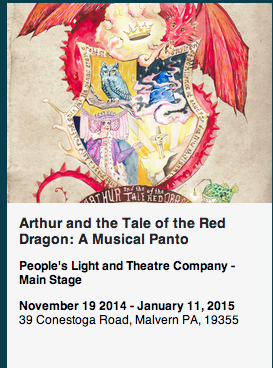
Now, the term used back in 1717 was “pantomime”; according to the Oxford English Dictionary, the shortened form “panto” didn’t appear till 1852. “Panto” now predominates and emerges (as Theatre-Britain neglected to note) in the Christmas season. And speak of the devil, here’s a current offering of a troupe near me:

Screen Shot 2014-12-23 at 9.36.11 AM

The doing of pantos by American companies is a kind of cultural Britishism, but I am inclined not to view either “panto” or “pantomime” as a NOOB, for the simple reason that there isn’t any alternative word for that thing.

“Browned off”

In my admittedly non-scientific experience, the gossip column of my local newspaper, the Philadelphia Inquirer, is my single best source for NOOBs. One reason, I speculate, is that the writers’ embarrassment at covering such silly stuff prompts them to frantic elegant variation, as if to say, “I don’t really mean this.”

In any case, in today’s paper I read, “One person browned off by the hacks at Sony Pictures is the company’s chief, Amy Pascal.”

“Browned off,” meaning angry or annoyed, originated as British service slang, with the OED’s first citation coming from 1938. “Browned-offedness” is a later, baroque variation.

It has appeared (in a non-British, non-gardening context) only three times in the New York Times, three of them from the great critic John Leonard, who clearly had a fondness for the term. In 1978, he pulled off a nifty play on words, referring to “the pious androgyny of the young, that Norman O. Browned-off polymorphic sullenness of the children of the sixties, sexual differentiation being such a drag.”
I predict that “browned off” will remain permanently On the Radar, mainly because the American lingo is so rich in colorful terms meaning the same thing. The king of them all is a two-word phrase, also ending in “off,” that I’ll leave to your imagination.

“In hospital”

Rose Jacobs, a colleague of mine at the Chronicle of Higher Education’s “Lingua Franca” blog, recently reported a use of “in hospital” on the public radio show “This American Life.” I’ve never come upon one myself, only “to hospital.” So I still count the expression as “On the radar.”

Rose also linked to an amusing New York Times column by Roger Cohen, an Englishman who, returning there after more than thirty years in the U.S., was reminded of the significant differences in language. He also found that British English had changed in his absence:

Somewhere in the interim the letter aitch had become “haitch,” with the result that spelling out my family name (surname) was painful. You had somehow morphed into the ghastly reflexive “yourself,” as in, “And for yourself?”

I had thought non-reflexive “yourself,” like “myself” (“Myself and Bill went to the movie”) was as American as it gets. Live and learn.

“Chokka”

My neighbor Mike Eiseman, about to embark on a trip to England, told me he was studying up on the native lingo, and mentioned a couple of words he had learned, one being “chockablock.”

I wasn’t aware of this as a Britishism, but I’m not aware of a lot of things, and I dutifully looked it up. The OED’s definition said it was originally used as a nautical term: “said of a tackle with the two blocks run close together so that they touch each other—the limit of hoisting; transf. jammed or crammed close together; also of a place or person, crammed with, chock-full of.”

The first citation in the OED was from an American, Richard Henry Dana, in  Two Years before Mast: “Hauling the reef-tackles chock-a-block.” The second, ten years hence, was from another Yankee seaman, Herman Melville.

But Mike was on to something, as I learned from another neighbor, Nanette Tobin. Nanette works for an international corporation, alongside a number of British people, and she often tells me about their expressions. (We are still waiting for the appearance of “leaving do”–“going-away party,” in AmE–on these shores.) I forget how it came up, but she happened to mention that her coworkers frequently talk of being “chokka,” i.e., busy. I just searched for it, and this came up on Twitter:

Screen Shot 2014-11-30 at 2.52.14 PM

I have never encountered “chokka” in the United States (it has never appeared in the New York Times), and expect to roughly the same time as “leaving do.”

Update: Some of the comments inspired me to look for alternate spellings of “chokka,” and indeed there are several. The OED lists “chocker” as the main form, in this entry:

Screen Shot 2014-12-01 at 9.41.52 AM

Interestingly, the OED doesn’t list the “super-busy” meaning or, indeed, the “chokka” spelling. Wait till the next edition.

Update to the Update:

A blog called L’Office du Jerriais, which describes itself as “the office that promotes the Jersey language,” linked to the above post and offered this additional information:

We have in Jèrriais the word “tchaque”, defined in the dictionary as “chock full”, presumably a borrowing from English, perhaps a maritime borrowing. We also have the verb “tchaquenarder” = to jostle. Whether the existence of the verb helped the assimilation of the English “chock” is a matter for speculation.

Idiom:
I’ s’tchaquenardait la chèrvelle = he racked his brains

Of course the English “chock” is by no means as English as it may appear, for if tchaque is chock then chock is really only being welcomed back to its Norman roots after an English vacation! English borrowed our Norman word chouque which became chock.

Chouque is also one of the Jèrriais words that crop up in Jersey English, used for example to refer to logs or firewood.

“Fug”

My friend Henry Fuhrmann, a copyeditor (subeditor to you lot) on the Los Angeles Times, today posted this image to Facebook:

10460708_10152497309311027_1610589640584692939_n

He noted: “We usually leave the Britishisms to, well, the British. But I like how Mary McNamara used ‘fug’ — meaning the unpleasant air in a crowded room — in her weekend commentary on Bill Cosby.”

The only “fug” I was aware of was the euphemism invented by Norman Mailer in The Naked and the Dead, later picked up by Ed Sanders in naming his ’60s rock band. But sure enough, the OED notes the word is “originally School slang” and provides this definition: “A thick, close, stuffy atmosphere, esp. that of a room overcrowded and with little or no ventilation.” The first citation was an 1888 quote from novelist E.F. Benson: “Seating himself in the most comfortable chair, as a consolation for the prevailing fug.” And there was also the interesting variation “fug-footer,” meaning indoor football and apparently spotted at Harrow in 1884.

Well played, Ms. McNamara!


“Secateurs”

On Twitter, sharp-eyed reader Jan Freeman noted the following caption from the New York Times “T” design magazine: “Kime with secateurs, looking for branches to display in the house.”

I have to admit, I had no idea what that meant, until I went to the article and then the dictionary. “Kime” is Robert Kime, a British interior designer, and “secateurs” is the British term for what Americans call pruning shears. (The picture shows Kime in the countryside near his vacation home in the Lake District, you got it, looking for branches.)

The author of the article is Rhoda Konig, who I happen to know is an American who has lived in London for years, but writers don’t write captions. The only acceptable excuse for the Times to have used “secateurs” rather than “pruning shears” is a kind of lexical ventriloquism (using the sorts of words your subject would use), but even that’s not much of an excuse.

I looked up “secateurs” in the Times’ index, and it turns out that, since 1851, the paper has used it about a dozen times. All but a couple were from the pen of longtime garden writer Anne Raver, who is from Maryland.

“Bonkers”

Stop! Do not write that comment! Or at least hold off until you read the whole post.

I am well aware that bonkers is and has long been common in American English. This Google Ngram chart shows that in the ’90s, U.S. use of the word (in red) was more frequent than British use (blue):

Screen Shot 2014-11-15 at 3.29.12 PM

And at this point, it’s hard to avoid on either side of the Atlantic. Here’s what a Google News search turns up:

Screen Shot 2014-11-15 at 3.36.01 PM

But the word is most definitely of British origin. The first citation from the Oxford English Dictionary is from a 1945 Daily Mirror article: “If we do that often enough, we won’t lose contact with things and we won’t go ‘bonkers’.”

Three years later, Eric Partridge included it in A Dictionary of Forces’ Slang: “Bonkers, light in the head; slightly drunk. (Navy.) Perhaps from bonk, a blow or punch on the bonce or head.”

Throughout the ’50s, the uses of the word I’ve turned up are all from  British writers:


  • From a 1951 novel by Philip Loraine, A Break in the Circle: “‘You bonkers?’ enquired Rocky. ‘Maybe.'”
  • From John Osborne’s play The Entertainer (1957): “We’re drunks, maniacs, we’re crazy, we’re bonkers, the whole flaming bunch of us.”
  • From Kingsley Amis, Take  Girl Like You, in 1960: “Julian’s absolutely bonkers too you know.”

The first use in the New York Times was a 1965 by the great Israel Shenker: “In ‘Paranoia,’ his newest picture, Italy’s Marcello Mastroianni goes slowly bonkers sharing bath, bed and Bedouin with three co-stars.”

That quote doesn’t even show up when you search for “bonkers” in the Times “Chronicle” app:

Screen Shot 2014-11-15 at 3.44.52 PM

Let’s take a look at the entire Ngram chart, from 1955 to 2008 (the last year for which there are good statistics):

Screen Shot 2014-11-15 at 3.41.11 PM

It shows British prevalence through about 1976, then equivalence until 1987, American dominance for the next fifteen years, and then (surprisingly) a resurgence in Britain.

Now go ahead and comment.