No one can say that we here at NOOBs don’t tackle the profound issues of the day. A Smithsonian Magazine headline, posted just an hour ago (as I write) read: “The Most Exclusive Coffee in the World Is Harvested From Elephant Poo.”
On the other hand, American Republican political operative Grover Norquist notoriously said after our recent election: “The president was elected on the basis that he was not Romney and that Romney was a poopy-head, and you should vote against Romney”
I don’t care much about Grover Norquist or the most exclusive coffee in the world, but I am interested in the possibility that British poo is taking over from good old American poop in the faeces euphemism department.
The question turns out to be a somewhat complicated one, as these questions tend to be. The OED offers two separate sets of entries for these terms, with separate etymologies. One derives from the onomatopoeic interjection “Poo,” dating from the 1600s, when it was more commonly spelled “Puh” or “Pooh,” or, as Fielding rendered it in this quote from Tom Jones: “‘Pugh,’ says she, ‘you have pinked a Man in a Duel, that’s all.’”
It was not until the 1960s, according to the OED, that the word began to be used as a noun or verb for excrement, as The Guardian did in 1981: “That doggy’s doing a poo.”
The second entry derives from a different instance of onomatopoeia. The OED cites this definition from an early eighteenth-century dictionary: “to break Wind backwards softly.” By the 1920s, poop had acquired, in the United States, solidity. The OED quotes Ezra Pound in a 1940 letter: “This federation poop is just the same old..secret committee of shit.”
Complicating manners are at least three additional meanings of poop. One, derived from the term for the rear of a boat, refers to the rear of a person or animal. The second–which Pound may have had in mind–is an American slang term, originating in the military, for inside information. The third, which probably isn’t relevant, is pooped, an Americanism meaning “exhausted” or “worn out.”
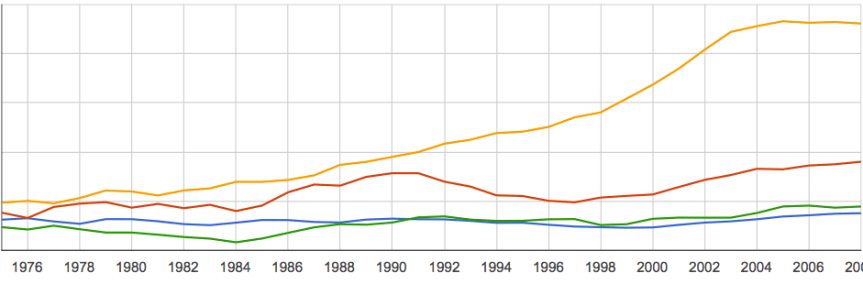
Getting back to poo versus poop, here is a Google Ngram chart showing use of dog poo and dog poop n Britain and the U.S. between 2000 and 2008 (the most recent year for which figures are available):

It confirms that the dominant form is poop in the U.S. (red line) and poo Britain (yellow line), and that poo (green line) is on the rise in the U.S., with a roughly 100 percent increase in the period.
Further research is clearly needed. For the time being, my sense is that my fellow Americans are rather conflicted on the matter, sometimes, as in this Huffington Post piece from March, trying to have it both ways:
“Poop. Is there anything it can’t do? On Wednesday, The Denver Zoo introduced what is believed to be the world’s first poo-powered motorized tuk tuk showcasing The Denver Zoo’s very own patent-pending gasification technology.”
Make up your mind, Huffington Post!


 But I found that the Susan Kamil quote wasn’t a one-off, as witness this from the Yale Daily News: “After winning every Ivy game this season, the women’s volleyball team is going from strength to strength.” (October 17, 2012) And this February 2102 quote from the Times’ David




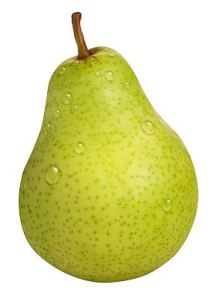 Reader Priscilla Jensen alerts me to this from the November 7 Wall Street Journal: “But [Barack Obama’s] opportunity will quickly go pear-shaped if the bond market loses confidence . . . ”
 notoneoffbritishisms.com