

On May 7 of this year, the New York Times reported the conversation of some Chicago grade-schoolers:
“Some people think cicadas can suck your brains out,” said Willa, a red-haired 8-year-old in a Star Wars T-shirt.
“They’re going to be so loud,” Christopher, 9, said as he colored his cicada intently. “I hate noise.”
“It’s kind of scary,” Madison, 8, said while picking through markers scattered on a green table. “What if they do something to me?”
Not to worry, Madison and Willa: Cicadas don’t actually bite, and they prefer to suck tree sap.
My topic today is the expression in the last paragraph, “Not to worry.” It means, essentially, “Don’t worry” or “There’s nothing to worry about it” or “No worries.” The online Merriam-Webster’s supplies two additional recent examples:
- “But not to worry: These eight online subscription gifts can be purchased within seconds to make your last-minute holiday shopping way less hectic.” — Phoebe Sklansky, Parents, 22 Dec. 2023
- If a tropical trip is not in your immediate future, not to worry.” — Rebecca Angel Baer, Southern Living, 18 Feb. 2024
As with quite a few words and phrases, I remember precisely where and when I first encountered it. I was in Chicago, on a vacation with my parents in 1965 or so, and it was uttered by a character in a comic book I was reading. Struck me as odd, but then it kept popping up over the years, with increasing frequency.
I never had a sense of its origin, but for me it always had a vaguely Jewish/Yiddish feel, like “I could care less” or “What am I, chopped liver?” But that’s not where it came from. When I finally got around to researching “Not to worry” I found, for one thing, that it’s a Britishism. In his A Dictionary of Catchphrases (1985 edition), Eric Partridge, who was born in New Zealand and lived in England his entire adult life, says of the phrase: “current, since the middle 1930s, in the [military] Services, and then, suddenly, in 1957-8, it began to be generally and very widely used.” Partridge quotes a 1967 informant: “It is old hat. I first heard it, ad nauseum, in the Admiralty about ten or twelve years ago.” And he quotes another informant, John W. Clark, saying in 1977 that the phrase is “never heard in US except from Britons or by sophisticated or affected imitators.”
Google Books’ Ngram Viewer graph of British and American usage confirms Partridge to a rather remarkable degree. (I did a case-sensitive search with a capital “N” to eliminate things like “I told him not to worry.”) It shows the phrase emerging in Britain in the ’40s and rising fairly rapidly in popularity in the late ’50s and ’60s. It turns up in American in the mid-’60s (that is, right around the time I read that comic book) and–pace John W.Clark– just keeps rising, surpassing British use in 1979.

It was so established here by 1995 that the singer Abbey Lincoln could write and record a song with that title. https://www.youtube.com/embed/QK40N0Jer-w?si=L12jVR2YxbzTAYiO
The OED finds the origin of the phrase, with its odd syntax, in an old Scottish custom to elide every word except “please” from sentences that start, “May it [or let it] please you…” There’s a quote from Milton’s Paradise Lost (1667): “Heav’nly stranger, please to taste These bounties which our Nourisher,..To us for food and for delight hath caus’d The Earth to yeild.” And this from a 1757 letter: “Please to send me the following things Vizt. 1 Dozen of Black mitts. 1 piece of Black Durant fine.”
Here are the first two examples the dictionary has found with “not”:

The first “Not to worry” is from The Daily Mail in 1958–just when Partridge said it was reaching catchphrase status.
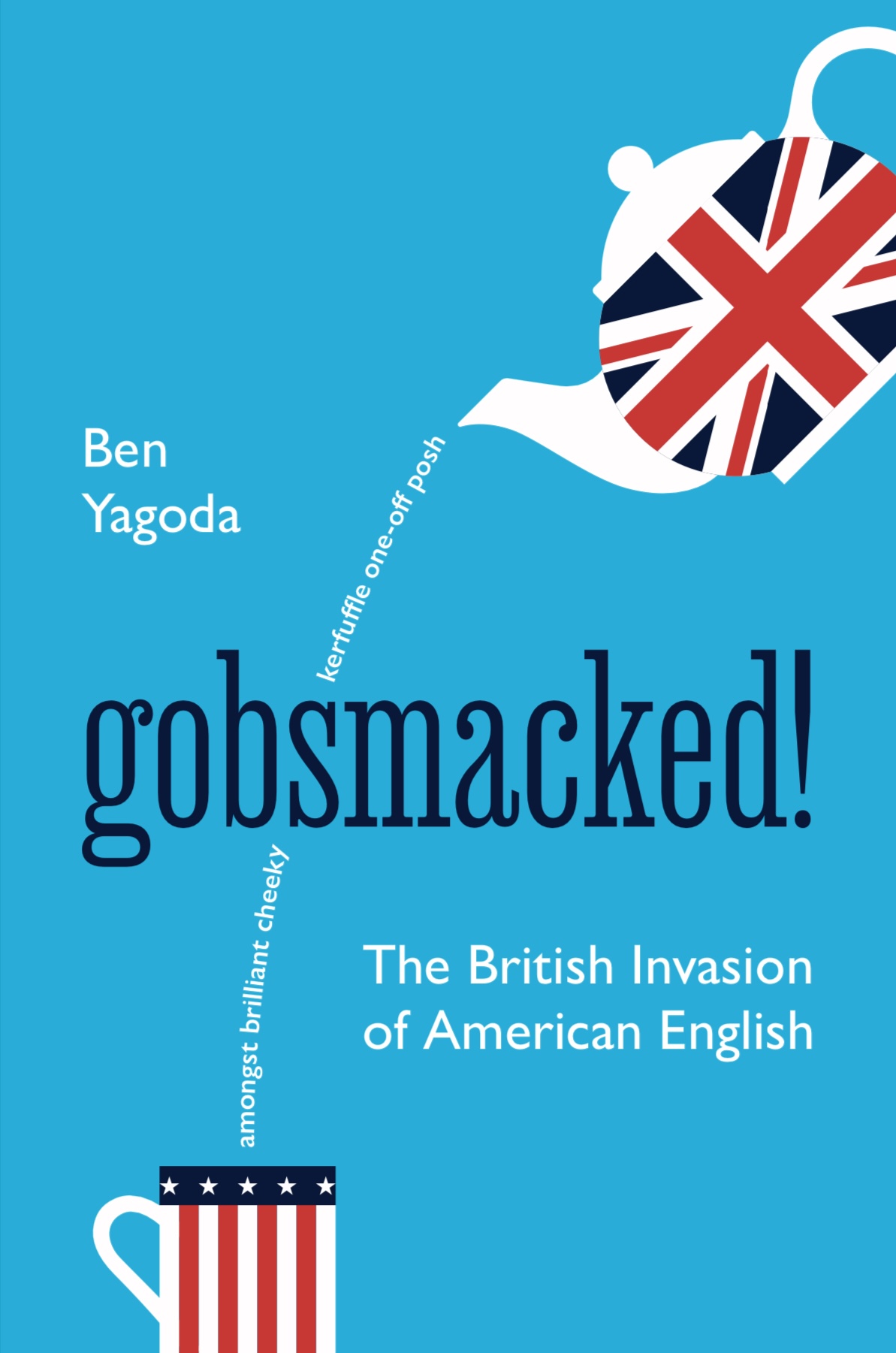
I’ll note in conclusion that even though I was wrong about Jewish origin, I’m not the only person who thinks the phrase has a Jewish feel. Here’s the cover of a book that came out in 2003.










 notoneoffbritishisms.com