“Tie-up”

I was listening to NPR the other day, and heard the proposed merger between Jeep and Peugeot referred to as a “tie-up.” I can’t actually find the show but there are quite a few other uses of the term, for example in an NPR story last August: “In their latest gasp for fresh ideas, Macy’s and J.C. Penney made the same choice: A tie-up with ThredUp, the largest online store for second-hand clothes.” And the New York Times in July referred to “talks of a tie-up between Fiat Chrysler and Renault.” (I guess Peugeot won out over Renault.)

I suspected a NOOB, a, because I had never encountered this meaning of “tie-up” and, b, because Americans have such a familiar and very different use of the noun. The OED defines this as: “A stoppage of work or business, esp. on account of a lock-out or strike; a stoppage of transport, a traffic hold-up.”

The dictionary’s information on merger/”tie-up” interesting. It started as a U.S. phrasal verb meaning ‘To associate or unite oneself or one’s interests with (or to).” From the New York Evening Post in 1903: “It becomes his first interest to make business for that yard. He can best do this by tying up with the other navy yard representatives on the committee.” The verb had migrated across the Atlantic by 1928, when The Daily Express wrote, ” Registered readers..have..‘tied up’ with the newspaper which..offers the best..insurance benefits,” the quotation marks indicating a relatively new usage. (I suspect also that by this time it was fading away in the U.S.)

The OED defines the noun rather generally, as “a connection or association,” and the first citation is from 1927, also from The Daily Express: “There is a tie-up, too, over this firm with the gramophone records. Every record of the ‘Happiness Boys’ is an advertisement for Happiness Chocolates.” (We might refer to that as a “tie-in.”) The citations run through 1974. All, with the exception of an F. Scott Fitzgerald quote, are British, and none refer specifically to a financial merger, leading me to think that this is a rather recent usage.

I asked Michael Regan, senior markets editor at Bloomberg, the worldwide business news enterprise, and he agreed with my hypotheses. “My sense,” he wrote me, “is that ‘tie-up’ is a Britishism that has crept into the language of the American financial press over, say, the past decade.”

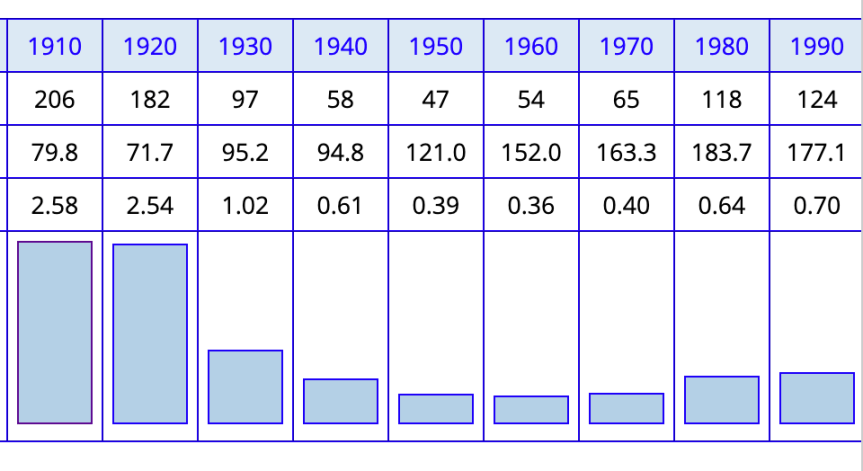
Better yet, he gave me some data. He was able to chart the use of both “merger” and “tie-up” in the myriad business-news sources that are published on the Bloomberg terminal. (They’re international but dominated by U.S. sources, Mike told me). He came up with two nifty graphs. This one shows the relative frequency of “merger” over the past ten years:Screen Shot 2019-12-20 at 10.33.20 AM

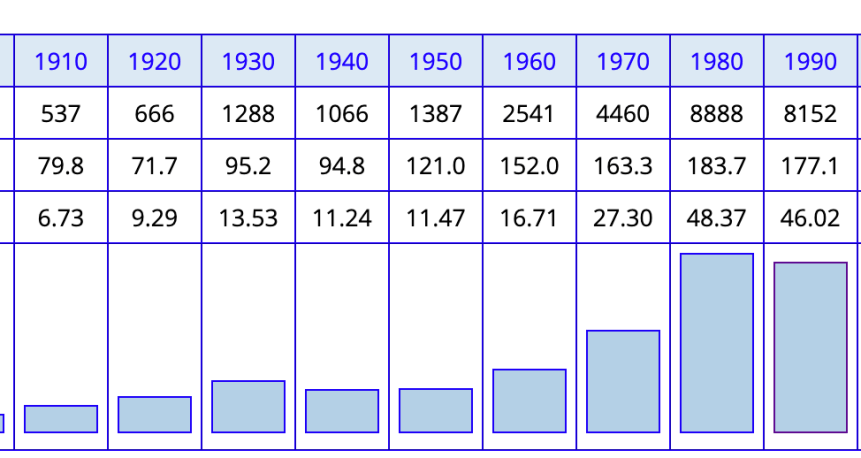
And here’s “tie-up”:

Screen Shot 2019-12-20 at 10.35.42 AM

It’s almost too neat: over the past five years (not ten, as Mike guessed), “merger” has fallen and “tie-up” has risen.

Mike also had a theory about “tie-up”‘s popularity:

I’ve been in financial journalism so long that I’m not sure how big of a deal they are to regular-news editors, but editors here and at other financial pubs are big sticklers for avoiding word echoes. It sort of makes sense in this corner of the journalism world, since you’re more prone to word echoes when writing about, say, a merger. And tie-up is a good synonym for merger because its short character count makes it good for headlines.

Word echoes, also known as word repetition, are what writers and editors are trying to avoid when they use what H.W. Fowler, in The King’s English (1908), called “elegant variation.” It’s the sort of thing sportswriters do when they refer to a second baseman not by name, but as “the fleet-footed second-sacker.” Fowler was not a fan, observing that “Many writers of the present day abound in types of variation that are not justified by expediency, and have consequently the air of cheap ornament.” Fowler listed many examples, including an article from the Westminster Gazette that, in the space of twenty lines, described paintings that “made, fetched, changed hands for, went for, produced, elicited, drew, fell at, accounted for, realized, and were knocked down for, various sums.”

One can only imagine what he would have made of “tie-up.”


“Splashed Out”

Jan Freeman, former language columnist for the Boston Globe, is one of the sharpest observers I know, and when she passes on a tip, it’s always worth listening to. So it was the other day when, on Twitter (@Jan_Freeman) she directed me to an article about holiday tipping in the November issue of Real Simple Magazine. The paragraph in question:

Rounding up to the nearest dollar on your coffee run is not necessary, but it’s a nice gesture, especially if you’re a regular or a barista has gone out of their way to make your visit special. “If they’ve really splashed out on the latte art or given you a great recommendation for walking around the neighborhood, go ahead and make it at least 20 percent,” says Emilio Baltodano, founder of Eleva Coffee in Brooklyn, New York.

And the phrase in question is “splashed out.” It was a new one to me, and when I looked into it I confirmed (as Jan suspected) that it wasn’t being used in the traditional way. The phenomenon of Americans slightly or not so slightly changing the meaning of a British expression isn’t a new one: see “cheers.” On the blog, I label these terms “shape-shifters.” Mr. Baltodano used it to indicate making a big effort, but the OED confirms that’s not the traditional British meaning.

d. colloquial. To spend (money) extravagantly or ostentatiously. Frequently const. adverbs, esp. in to splash (money) out on (something). Also absol.

1934   Times 7 Mar. 7/5   Public money ought not to be splashed about in this manner without grave and searching examination by the House of Commons.
1946   F. Sargeson That Summer 82   After we’d splashed on a talkie we went home.
1960   S. Barstow Kind of Loving ii. ii. 170   I splash eight-and-six on a pound box of chocolates and send them with a little note.
1973   Courier & Advertiser (Dundee) 1 Mar. 2/2   Allied now plan to splash out an extra £150,000 on advertising.
1978   Morecambe Guardian 14 Mar. 17/2   Splash out on something new to wear; the result will be worthwhile.


So it seems to have started as “splashed” or “splashed about,” with the “splashed out” form taking hold in the 1970s. Judging by the New York Times, it’s gotten some use on these shores, mostly in reference to business or sports moguls shelling out cash. From 2016: Disney chief Bob Iger “splashed out $1 billion for a one-third stake in Major League Baseball’s streaming technology, with the option to buy it out.” 2017: former Microsoft CEO Steve Ballmer “splashed out $2 billion for the Los Angeles Clippers in August 2014.” And in 2018, “teams in the decidedly mediocre Chinese Super League splashed out more than $400 million on international stars like Carlos Tevez and Oscar, outspending even the English Premier League.”

As far as I can tell, it’s the precise equivalent of the traditional U.S. “shell out,” the moral being, never underestimate the appeal to journos of elegant variation.

Update: A lively discussion in the comments has persuaded me that, in Britain at least, “splashed out” is not the same as “shelled out.” I don’t agree that “shelled out” always or even usually implies reluctance, but, clearly, “splashed out” conveys enthusiasm (sometimes deployed ironically) or splurging. I still maintain, however, that the three New York Times examples are equivalent to “shelled out,” suggesting that U.S. use of “splashed out” has shape-shifted it a bit.

Stalking the Elusive “Meant to”

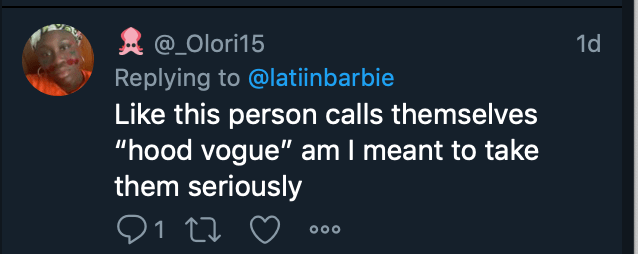
Some of the differences between British and American English are quite subtle. I give you the expression “meant to.” It’s certainly used here, with the meaning “designed to” or “intended to.” We would say, “I meant to get here early but I was delayed,” or, “In ‘Mona Lisa,’ the clouds are meant to represent God.”

But in recent decades, the British have used it in a distinctive way, as did the model Naomi Campbell in this quote from The Guardian:

I remember the day I was spotted in the street. It was a warm April afternoon, and I was hanging out with my friends after school. The three of us were dressed in our Italia Conti uniforms: a pale blue dogtooth kilt, a dark blue V-neck sweater, shirt, blazer, tie. We were meant to wear straw boaters, too, but never did.

An American would say “supposed to,” and that’s basically what this British “meant to” means. Another example comes from an NPR interview with the British novelist Sadie Jones: “The hotel — he’s meant to be renovating it — and he’s sort of meant to be renovating himself.” Her meaning is along the lines of “tasked with.”

Interestingly, the OED stresses a slightly different sense in its relevant entry.

d. In passive, with infinitive clause: to be reputed, considered, said to be something.

1878   R. Simpson School of Shakspere I. 34  It is confessed that Hawkins and Cobham were meant to be buccaneers, and it is absurd to deny the like of Stucley.
1945   Queen 18 Apr. 17/1   ‘Such and such a play,’ they [my children] will say, ‘is meant to be jolly good.’
1972   Listener 9 Mar. 310/1   America..is meant to be a great melting-pot.
1989   Times 30 Mar. 15/1   It [sc. evening primrose oil] is also meant to be good for arthritis.


The 1945 quote from Queen indicates that it was at that time a fairly new (and youth-based) usage. But it still apparently provokes some ire, as in this sniffy comment on an English-language website: “The now-common use of ‘meant’ instead of ‘supposed’ in that context is a relatively recent phenomenon in the UK, and appears to have come in from the bottom, like so many other instances of poor usage and mispronunciation. The usage is rare in other speakers of Commonwealth English.”

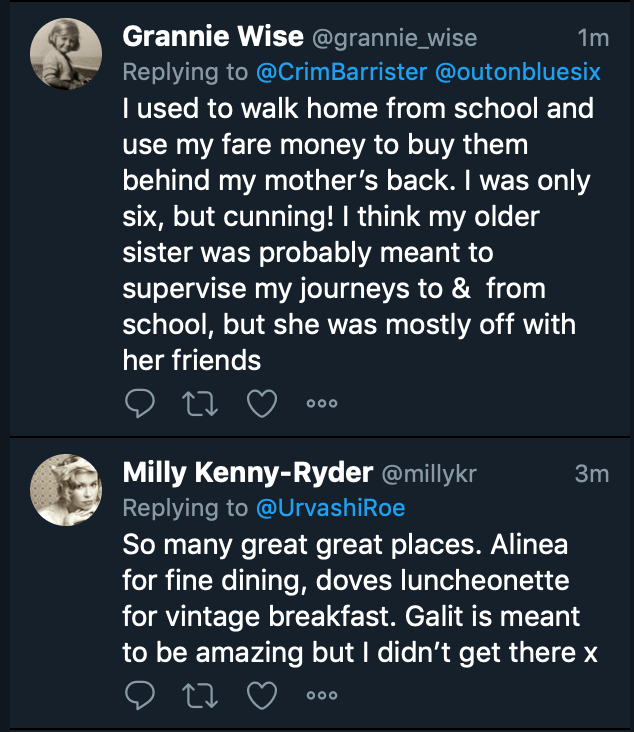
Here are a couple of examples from British Twitter:

Screen Shot 2019-11-30 at 10.28.54 AM

Now, as far as this blog goes, the question is whether British “meant to” has crossed to the U.S. I recently spotted it for the first time, in an article by the Maryland-born, Berlin-based writer Ben Mauk, reprinted in the anthology The Best American Travel Writing 2019. He’s talking about a pagoda in Cambodia and he says, “Only monks and laypeople are meant to live at the pagoda.”

That’s not much to go on, so I asked my sharp-eared daughter Maria Yagoda, who had alerted me years back to “fully“–come to think of it, a similar case, since there’s overlap in usage and the differences are subtle. She said she had definitely heard it aand would send on some examples–but she hasn’t come across any yet.

So I went on American Twitter and found this:

Screen Shot 2019-11-30 at 10.39.38 AMScreen Shot 2019-11-30 at 10.38.47 AM

At this point, “meant to” is On the Radar. Stay tuned.

“An historic” (and such)

Joshua Friedman (@joshuajfriedman) writes on Twitter:

Have you written or read anything about the relatively recent resurrection of “an historic”? My casual experience makes me think it happened around the 2008 election, but I haven’t seen data.

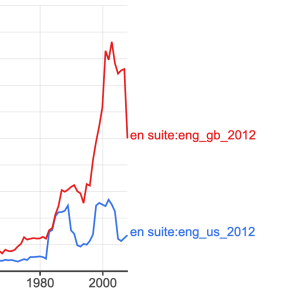
He’s referring to using “an” rather than “a” before words that start with a non-silent “h,” like “habitual,” “happy,” and “hotel” (but not “honest” or — in America — “herb”). Here’s the general lay of the land, from Google Ngram Viewer (which has reliable data only through 2000):

Screen Shot 2019-11-20 at 11.46.58 AM

You can see “an historic” was traditionally more common in Britain (red line) than in the U.S. (orange line), but that “a historic” overtook it in both countries — in the late ’30s in America, in the late ’60s in Britain. So “an historic” counts for me as Britishism. The question is whether Joshua’s correct and it’s lately been taken up by Americans.

By the way, I chose the mid-’20s as the start of the chart for a reason. H.W. Fowler’s Modern English Usage was published in 1926, and in the very first entry, Fowler takes on this subject, writing in his inimitable way:

“A” is used before all consonants except silent h (“a history,” “an hour”); “an” was formerly used before an unaccented syllable beginning with h (“an historical work”), but now that the h in such words is pronounced the distinction has become pedantic, & “a historical” should be said and written; similarly “an humble” is now meaningless & undesirable.

And also by the way, in 1997, when Kevin Kerrane and I were choosing a subtitle for our anthology The Art of Fact, we chose A Historical Anthology of Literary Journalism, only briefly considering An Historical….

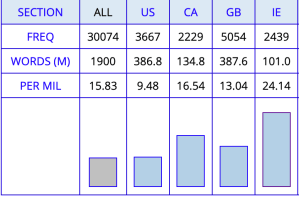
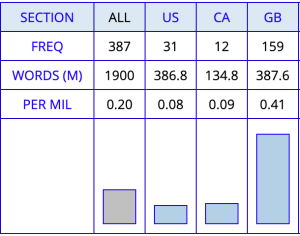
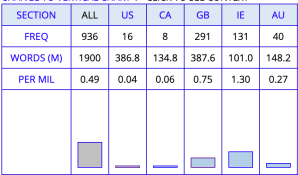
So have things changed since 2000? Contra Friedman, apparently not significantly. The News on the WEB (NOW) consists of nearly 9 billion words published on news sites between 2010 and the present. In it, “a historic” shows up 6.56 times per million words and “an historic” 1.52 times per million words, a proportion that has held steady from 2010 till now. Still, that 4-1 ratio reveals “an historic” having surprising staying power, which is probably what Joshua was observing. According to NOW, it’s used most commonly in Ireland, and least commonly — but not negligibly — in Canada and the U.S.

Screen Shot 2019-11-20 at 11.37.29 AM

And here are some examples of its American use over the course of just five days recently, also taken from NOW:

Screen Shot 2019-11-20 at 11.38.00 AM


British Copyeditor at N.Y. Times?

A while back, I pondered that signs in Philadelphia say “No Parking In This Street,” where American usage would favor “… On This Street.” The other day this photo captioned showed up in the Real Estate section of the Sunday New York Times, below a photograph of an apartment:

IMG_0040 2

To be clear, Sutton Place is a street in New York City, and American would normally refer to an apartment “on” Sutton Place. Either “in the street” is taking hold in the U.S., or the Times has a British copyeditor writing captions.

Update: I am reliably informed that in New York, Sutton Place is not only a street but a neighborhood, in which case “in” would be consistent with American usage. In the words of Emily Litella, never mind.


“Chuffed to be here”

A few days ago, Philadelphia-born musician Todd Rundgren inducted his fellow rockers The Hooters into the Philadelphia Music Alliance Walk of Fame. Here’s a little of what he had to say, as recorded by Dan DeLuca of the Philadelphia Inquirer.

Explanatory note 1: Jerry Blavat, aka The Geator, aka The Boss with the Hot Sauce, is a legendary Philadelphia DJ whose career has spanned from 1960 till the present day.

Explanatory note 2: “chuffed” is a NOOB meaning, basically, pleased as punch.

The magic of the Internet reveals that Rundgren–who’s had lots of collaborations and contact with British musicians, notably Ringo Starr–has used the word at least once before, in this 2017 interview with Variety.

Screen Shot 2019-10-24 at 9.57.49 AM


Ventriloquism

If you look to the right of this post and scroll down a bit, you’ll find a “Category Cloud,” consisting of words or phrases with which I’ve tagged posts.  If you click, you’ll be taken to the relevant posts. I haven’t been very diligent in my tagging, which one reason why the biggest word is “Uncategorized.” (The larger the type, the more often the category has been used.)

You’ll find a fair number of posts in such categories as “On the Radar,” “Outliers,” “Australianisms,” and “Food and Drinks.” Others are more or less orphans, including “Ventriloquism.” This refers to the phenomenon of American writers using British terminology while writing about British people or topics. While I’ve only labeled one post that way, it’s not at all uncommon.

The latest example I’ve encountered is from the Twitter-feed of American (New York-born) journalist Heidi N. Moore. Yesterday, she objected to a Guardian obituary of the English Scottish Deborah Orr (which did indeed come off as weirdly passive-aggressive and drawn to non-relevant details).

Screen Shot 2019-10-22 at 11.06.20 AM

(By the way, for those not on American Twitter, there’s a tradition to adopt scary names around Halloween time, hence “Hades N. Morbid.”)

There are two NOOBs in the tweet: “stroppy” (derived from obstreperous and meaning bad-tempered or belligerent) and “sacking,” British equivalent of American “firing.”

Then Moore–who once was a U.S. correspondent for The Guardian–followed up by going even deeper into Brit-speak, to terms that haven’t even penetrated here.

Screen Shot 2019-10-22 at 11.06.53 AM

“Sloane”: “a stereotypically conventional, if fashionable British upper-middle-class young woman (occas. man)”–Green’s Dictionary of Slang. “Head girl”: “an older female student in a British school who is chosen to have special duties and to represent the school“–merriam-webster.com.

The really subtle one there is the last two words, “won’t they?” It’s a very British thing to use these question tags (sometimes called tag questions) at the end of sentences. In fact, I’m driven crazy by their incessant use by British tennis and football commentators; I keep wanting the scream out the answer. And I have a sense that the use has spread to American announcers. If I get some data, I’ll write a post about it–and make sure to mark it with the correct category, won’t I?

“Poser”

I was recently talking with a professor at an American university who regularly brought students to London for study-abroad programs. (He’s now retired.) He said that by the end of the semester, his male students had always incorporated into their vocabulary three insults: wanker, tosser, and poser. I’ve covered the first here (and touched on it several other times: plug it into the “Search” field at right to see). As for “tosser,” the OED defines it as “A term of contempt or abuse for a person; a ‘jerk,'” and etymologically originates it in the same activity as “wanker.” But it seems to be used rarely if at all in the U.S.

However, “poser” is worth looking into. Here’s what the OED has to say:

Screen Shot 2019-10-16 at 12.12.52 PM

Since “poseur,” from the French, is an almost identically-spelled synonym, it’s worth looking at the OED deets:

Screen Shot 2019-10-17 at 3.04.18 PM

This suggests to me that “poseur” has been out and about since circa 1870; the Time and Maxim (American lad magazine) citations and a Google Ngram Viewer chart suggest it’s been used with relatively equal frequency in the U.S. and Britain.

Screen Shot 2019-10-17 at 3.08.53 PM

The Anglicized “poser” is trickier. First, note all the citations are British. Second, I suggest that the Pall Mall Gazette and Shaw (” The man..is young, agile, a talker, a poser, sharp enough to be capable of anything except honesty or altruistic considerations of any kind”) quotes are interesting outliers, in which the straightforward noun “poser,” one who poses, is extended to the derogatory meaning the word would later come to adopt. Even the 1987 Guardian quote (“I’ve always been a poser,..but the first time I did a modelling job I was shit scared”) seems to refer to literal posing. Only the final quote, from The Sun, sounds like the “poser” one is used to today: “The former World Cup striker is shown as a precious poser who wears a blond wig and refuses to play if it’s raining.”

It’s a little hard to be definitive with “poser,” since in database searches I’ve found it impossible to separate out two other meanings of the word: a hard-to-answer question (“that’s a real poser”) and a French verb meaning to put or to place. But assuming that “poser”=”poseur” had taken hold in the 1980s (by which time “poser”=tough question had fallen out of fashion), Ngram Viewer shows almost twice as frequent use in U.K. as in U.S. (As I’m fond of saying, reliable data for Ngram Viewer only goes up to 2000.)

Screen Shot 2019-10-17 at 3.16.58 PM


But the word has caught on on this side of the pond. The main character in a new Broadway play by Tracey Letts says Radiohead’s Thom Yorke is nothing but a “scrubby little poser.” (I know Yorke is English, but Letts is a Yank.) The headline of an ad in the New York Times reads

Getting Digital Right: Posers, Players and Profits

And last month Forbes had:

Peak Performer Vs. Professional Poser: Creating The Right Team

Earlier this year, Times columnist Maureen Dowd wrote that Democratic presidential candidate Beto O’Rourke has been compared to “a middle-school poser who ‘went to Zumiez and spent $27 on stickers.'”

Don’t ask me to explain that. I only come up with the quotes, not what they mean.


“Full marks”

shopping
Note British “odour” spelling

This post marks a Not One-Off Britishisms first. I don’t believe it’s ever previously happened that, while researching American use of a British word or phrase, I came upon an example written by me. The phrase is “full marks.” Merriam-Webster’s online dictionary has these definitions and examples:

1 chiefly British : the highest possible grade on an exam or in a course. “She got full marks for the coursework”… — Lancashire Telegraph

2 chiefly British : due credit or commendation. “Regarding the question of aircraft nomenclature, my pet peeve is commercial airline aircraft. I give the Europeans full marks in this department: Comets, Caravelles and Concordes are above reproach.”— John Ryan

There’s a nice used of the term, sort of half-literal and half-metaphorical, in E.M Forster’s A Room with a View:

Screen Shot 2019-10-02 at 3.40.27 PM

In my many years as a student and teacher, starting in 1960, I don’t believe I’ve ever encountered Merriam-Webster’s first meaning. The American equivalent would be “got 100” or “got straight As” or “aced it.” But I found that in years past, it was used here. This is from a 1908 New York Times article about a graduation ceremony at a school “for Immigrant Children”:

Screen Shot 2019-10-03 at 10.10.44 AM

The literal meaning fell out of favor in American education but the figurative use shows up in the prose of mid-20th century belle-lettristic sorts, including Times writers like Orville Prescott, Arthur Krock, and Brooks Atkinson, who in a 1947 pan of a Molnar play wrote of the author, “Possibly he should be given full marks for attempting a sublime theme.”

But the phrase was used considerably more commonly in Britain, especially in the ’30s through the ’60s, as this Google Ngram Viewer graph shows. (Reliable data for Google Ngram Viewer only goes up to 2000.)

Screen Shot 2019-10-03 at 11.00.12 AM

Nowadays, the metaphorical meaning pops up quite a lot in the U.S., including two in sports contexts in just the past few days: The (American) football website Fansided on October 1: “If [Josh] Rosen ever becomes a legitimate starter in the NFL, full marks to him.” And ESPN’s National Hockey League preview on September 30: “Full marks to Niklas Hjalmarsson and Brad Richardson” of the Arizona Coyotes.

There have been twenty-one uses in the Times since 2012, including:

  • Recap of the TV series Outlander: “Full marks to Sam Heughan and Caitriona Balfe for doing a scene on actual horseback instead of on barrels with hair.”
  • Theater critic Charles Isherwood: “I’d grant [playwright Adititi] Kapil full marks for invention.”
  • Sports column quoting Ron Katz, the chairman of the Institute of Sports Law and Ethics at Santa Clara University, on a National Football League report on “deflate-gate”: “I thought the N.F.L. was going to brush it under the carpet. I give them full marks for coming out with this report.
  • Theater critic Ben Brantley in a review of The King and I: “give full marks to the first-rate Ruthie Ann Miles”

And including an article about comma use listing various mistakes and saying that if the reader spotted them, “give yourself full marks.” The author, I was interested to note, was Ben Yagoda.

“Numpty”

I was surprised to find that I have never covered this term for a stupid or foolish person, given that I have done wazzock and shitgibbon, and that British insults are much in the air. The OED describes “numpty” as originating in Scotland and gives this possible etymology: “Origin uncertain; perhaps an alteration of numps n. or numbskull n., with ending perhaps remodelled after humpty-dumpty n.” The first citation is from 1985  (‘They are a pair of turkeys,’ he said. ‘Numpties, the both of them.’–P. Firth, The Great Pervader), and more recent ones show a migration to England.

Neither the OED nor Green’s Dictionary of Slang show U.S. use, but the term did appear in the New York Times in 2009, when Dallas-born novelist Bill Cotter said:

In the mid-’80s, Boston’s Kenmore Square, where part of [his novel Fever Chart] is set, was home to three-card-monte men, ordinary punks, beer-devastated Red Sox bleacher-seat numpties, the Guardian Angel menace, and the only music venue worth visiting in that fourth-rate city, the Rat, a black basement often populated with bloody-nosed hardcore girls swinging tiny fists of stone.

More recently, I’ve started to see it over on Twitter, inevitably regarding the most frequent subject of all these insults, the U.S. president. As I’ve noted previously, the Tweetdeck application lets you filter tweets geographically. Here are some recent ones that use “numpty” and were posted within 200 kilometers of New York City:

Screen Shot 2019-09-09 at 11.36.45 AM