

Joshua Friedman (@joshuajfriedman) writes on Twitter:
Have you written or read anything about the relatively recent resurrection of “an historic”? My casual experience makes me think it happened around the 2008 election, but I haven’t seen data.
He’s referring to using “an” rather than “a” before words that start with a non-silent “h,” like “habitual,” “happy,” and “hotel” (but not “honest” or — in America — “herb”). Here’s the general lay of the land, from Google Ngram Viewer (which has reliable data only through 2000):

You can see “an historic” was traditionally more common in Britain (red line) than in the U.S. (orange line), but that “a historic” overtook it in both countries — in the late ’30s in America, in the late ’60s in Britain. So “an historic” counts for me as Britishism. The question is whether Joshua’s correct and it’s lately been taken up by Americans.
By the way, I chose the mid-’20s as the start of the chart for a reason. H.W. Fowler’s Modern English Usage was published in 1926, and in the very first entry, Fowler takes on this subject, writing in his inimitable way:
“A” is used before all consonants except silent h (“a history,” “an hour”); “an” was formerly used before an unaccented syllable beginning with h (“an historical work”), but now that the h in such words is pronounced the distinction has become pedantic, & “a historical” should be said and written; similarly “an humble” is now meaningless & undesirable.
And also by the way, in 1997, when Kevin Kerrane and I were choosing a subtitle for our anthology The Art of Fact, we chose A Historical Anthology of Literary Journalism, only briefly considering An Historical….
So have things changed since 2000? Contra Friedman, apparently not significantly. The News on the WEB (NOW) consists of nearly 9 billion words published on news sites between 2010 and the present. In it, “a historic” shows up 6.56 times per million words and “an historic” 1.52 times per million words, a proportion that has held steady from 2010 till now. Still, that 4-1 ratio reveals “an historic” having surprising staying power, which is probably what Joshua was observing. According to NOW, it’s used most commonly in Ireland, and least commonly — but not negligibly — in Canada and the U.S.

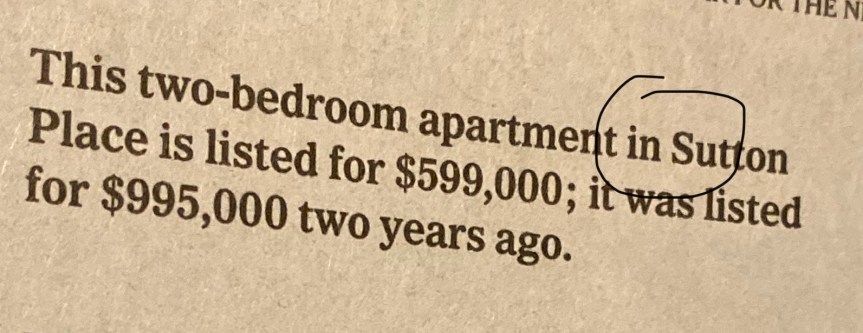
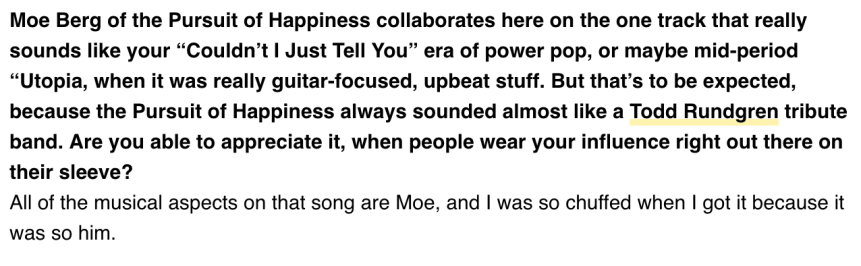
And here are some examples of its American use over the course of just five days recently, also taken from NOW:







 notoneoffbritishisms.com