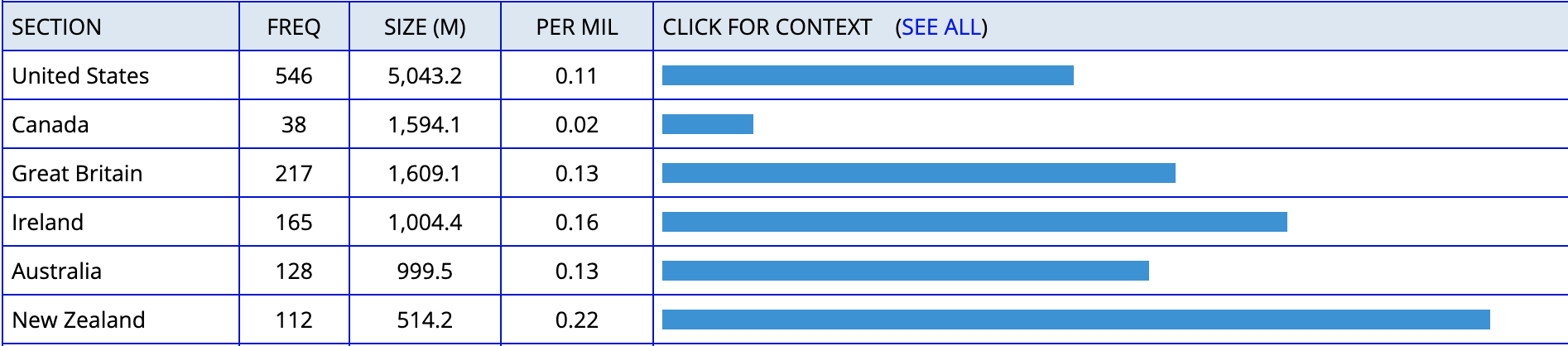
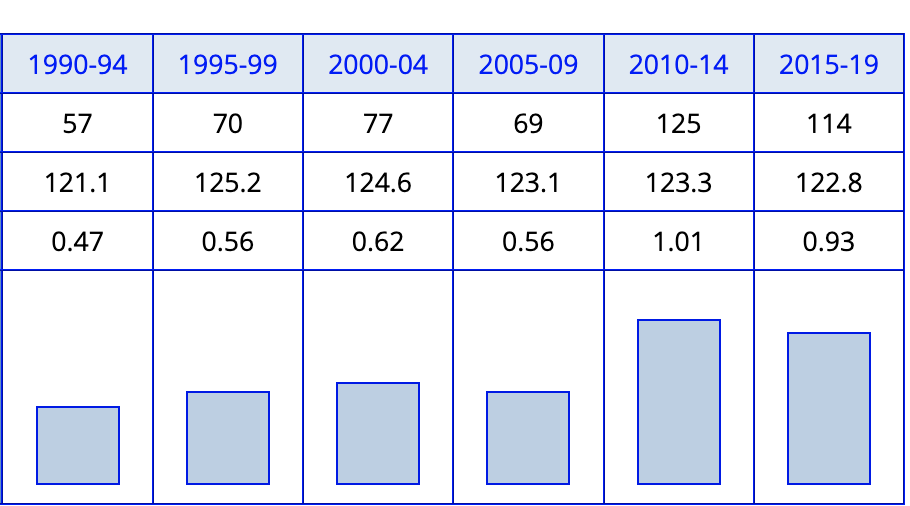
The English writer David Mitchell’s latest novel, Utopia Avenue, is about a (fictional) late-’60s British rock band who, at various points, encounter (real-life) rock and roll figures. One scene takes place on the roof of the Chelsea Hotel in New York, where Janis Joplin gives an impromptu performance. After one song, she takes her leave because, she says, “I’ve a session tomorrow.”
I found that piece of dialogue surprising, but at the same time not surprising. Surprising that Joplin, a native of Texas, would actually have said, “I’ve got a session” or maybe “I have a session”; the “I’ve a” construction is a Britishism. But not surprising because I’d already encountered a half-dozen examples in the novel of American characters using British words or phrases (and would come upon at least eight more in the remainder of the book). For example:
- Gene Clark, on quitting The Byrds: “Now it’s gone, I want it back.” (American English: “Now that it’s gone.”)
- Paul Kantner of Jefferson Airplane: “Chalk and cheese.” (A very British expression indicating two things very different in quality or value.)
- Frank Zappa: “Accidents are often art’s best bits.” (Americans would say “best parts” or “best features.”)
It’s not only rock stars who talk this way. Other American characters in the book use the British terms “spot on,” “hey presto” (all of a sudden), “chop chop” (hurry up), “the chop” (getting fired), “reckons” (figures), “eyehole” (keyhole peephole), “carry on” (keep going), and “the till” (the cash register).
I’ve written about this phenomenon — British novels with American characters who use Britishisms — before, most recently here. But now I have a name for it: lexical anatopism. Anatopism is the equivalent of anachronism, except referring to words out of place rather than words out of time.
It’s not hard to imagine how this sort of thing happens. For both British authors and British copyeditors, lexical anatopism (like lexical anachronism) is a potential blind spot, a Donald Rumsfeldesque “unknown-unknown” situation. That is, they are aware that Americans would say “elevator” instead of “lift,” or would never say “telly,” but there are thousands of other expressions they probably don’t even realize are exclusively British. They just sound normal. Hence they don’t flag or query them when they come out of the mouth of an American character.
American copyeditors would indeed sense something off, and I’m sure make many changes along these lines. But generally speaking, British books have already gone through the full editorial process before they cross the pond, and therefore often don’t get the fullest level of scrutiny over here. Benjamin Dreyer, the copy chief of Random House (which published Utopia Avenue) and the author of Dreyer’s English, says, “When we publish a British book, we don’t do a thorough copyedit, unless that’s been prearranged. We do what I call a ‘vigorous proofread.’ Our editors pick up U.K. terms so obscure that even a reasonably Anglophilic U.S. reader wouldn’t understand them, like ‘ginger group’ [a ‘formal or informal group within an organization seeking to influence its direction and activity’—Wikipedia] or ‘Sat Nav’ [for GPS].'”
But “eyehole” for keyhole and “till” for cash register go through.
One might imagine the same thing happening the other way around—that is, British characters in American novels talking in Americanisms. I haven’t noticed it, possibly because I don’t recall reading that many American novels with British characters, possibly because of my own Rumsfeldian blind spot, or possibly because of a point raised by (American) romance novelist and linguistics professor Julie Tetel Andreson: “The influence of American movies and television has brought American usages into English speech—or, at least, this influence has made those usages not as foreign as they once might have been.”
But Andreson says both anatopism and anachronism are problems in Regency romances set in the early 19th century. She reports a couple of pieces of dialogue that are guilty of both sins: “It seemed like a good idea at the time,” and “I’ll bet.”
There are, of course, worse sins against literature than this sort of misstep, but they are nevertheless a bad business. As they accumulate in a novel, disbelief gets harder to suspend, credibility is strained, and the author’s spell, such as it is, begins to be broken. I humbly request a bit more effort by copy desks on both sides of the pond to ensure that dialogue is, well, spot on.