Couldn’t resist…

Posting Scottish tennis star Andy Murray’s Twitter photo.

Screen Shot 2014-12-28 at 8.52.20 AM

Note: Here’s my post on chuffed. I’ve written a lot about various NOOBy uses of “bits” (for example here and here) but not Murray’s use, for which Americans would substitute “to pieces,” if anything. Nor has “jumper” (aka “sweater) made any inroads here, although, come to think of it, I bet Nancy Friedman has made some twee retail sightings.

“Panto”

Not long ago, Nancy Friedman alerted me to the use of “Panto” in her native San Francisco. For the uninitiated, in the words of the Theatre-Britain website, “A panto is a traditional fairy tale complete with songs, dances, jokes, exaggerated characters and lots of audience participation. The British love a good panto. In fact the nation has been mad on it ever since the actor manager John Rich introduced it in 1717.” (Note to self: check “mad on it.”)

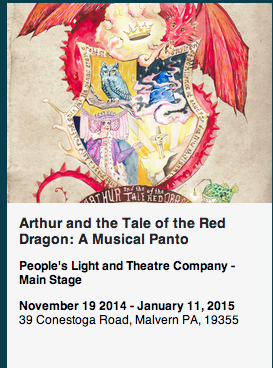
Now, the term used back in 1717 was “pantomime”; according to the Oxford English Dictionary, the shortened form “panto” didn’t appear till 1852. “Panto” now predominates and emerges (as Theatre-Britain neglected to note) in the Christmas season. And speak of the devil, here’s a current offering of a troupe near me:

Screen Shot 2014-12-23 at 9.36.11 AM

The doing of pantos by American companies is a kind of cultural Britishism, but I am inclined not to view either “panto” or “pantomime” as a NOOB, for the simple reason that there isn’t any alternative word for that thing.

“In hospital”

Rose Jacobs, a colleague of mine at the Chronicle of Higher Education’s “Lingua Franca” blog, recently reported a use of “in hospital” on the public radio show “This American Life.” I’ve never come upon one myself, only “to hospital.” So I still count the expression as “On the radar.”

Rose also linked to an amusing New York Times column by Roger Cohen, an Englishman who, returning there after more than thirty years in the U.S., was reminded of the significant differences in language. He also found that British English had changed in his absence:

Somewhere in the interim the letter aitch had become “haitch,” with the result that spelling out my family name (surname) was painful. You had somehow morphed into the ghastly reflexive “yourself,” as in, “And for yourself?”

I had thought non-reflexive “yourself,” like “myself” (“Myself and Bill went to the movie”) was as American as it gets. Live and learn.

“Secateurs”

On Twitter, sharp-eyed reader Jan Freeman noted the following caption from the New York Times “T” design magazine: “Kime with secateurs, looking for branches to display in the house.”

I have to admit, I had no idea what that meant, until I went to the article and then the dictionary. “Kime” is Robert Kime, a British interior designer, and “secateurs” is the British term for what Americans call pruning shears. (The picture shows Kime in the countryside near his vacation home in the Lake District, you got it, looking for branches.)

The author of the article is Rhoda Konig, who I happen to know is an American who has lived in London for years, but writers don’t write captions. The only acceptable excuse for the Times to have used “secateurs” rather than “pruning shears” is a kind of lexical ventriloquism (using the sorts of words your subject would use), but even that’s not much of an excuse.

I looked up “secateurs” in the Times’ index, and it turns out that, since 1851, the paper has used it about a dozen times. All but a couple were from the pen of longtime garden writer Anne Raver, who is from Maryland.

“Bits,” again

I have covered the use of BrE “bits” instead of the AmE “parts,” as in “the good bits,” “the naughty bits,” “lady bits,” “dangly bits,” etc. I’ve recently noticed another “bit” popular among journalists, as a synonym for a piece of work, traditionally and customarily shortened to a “piece.” David Carr of the New York Times is fond of it, and here it is from Michelle Dean on Twitter: Screen Shot 2014-09-19 at 12.01.48 PM The OED suggests that the use of bit by itself in this way derives from tit-bits or tidbits, referring to a number or series of small items. The dictionary gives these citations:

1896   Daily News 4 Nov. 2/7   This is a weekly journal called ‘Gems’. As its title suggests, the new paper will be of the ‘bits’ order.
1928   Granta 30 Nov. 172/1   If the editor of the Review were to ask me to write a little bit about Christmas I should laugh in his face.
The newfound popularity may stem from the fact that the flood of communications we are flooded with in this day and age, any one of them, no matter how long, starts to seem like a tidbit. Or, in fact a “bit”–in the sense of the tiny pieces of information by which computers operate. (The word, which dates from about 1947, was coined by J.W. Tukey as a combination of “binary digit.”)
But all that is a bit of a speculation. No pun intended.

IWS

Incipient “Wanker” Spread, that is. An American friend (who works for a U.S. company) posted this photo on Facebook this morning, explaining that it’s a photo of the Post-It note that had been affixed to his keyboard overnight.

10407549_10203586897485765_912045831877120622_n

I asked for further details and he responded: “Still a mystery to me… though I suspect a British colleague who was displeased I left the TV volume on too loud.”

If more forensic information is unearthed, you will be the first to know.