

The New York Times had a nice headline the other day:

The word “swans” in the title of the TV series refers to the word author Truman Capote used to refer to the upper-crust New York women he socialized with, and ultimately betrayed. For an article about a party celebrating the series, the clever Times headline writer used the British verb “swan“–meaning (according to the OED), “To move about freely or in an (apparently) aimless way.”
The next one’s from the print edition of the Times.
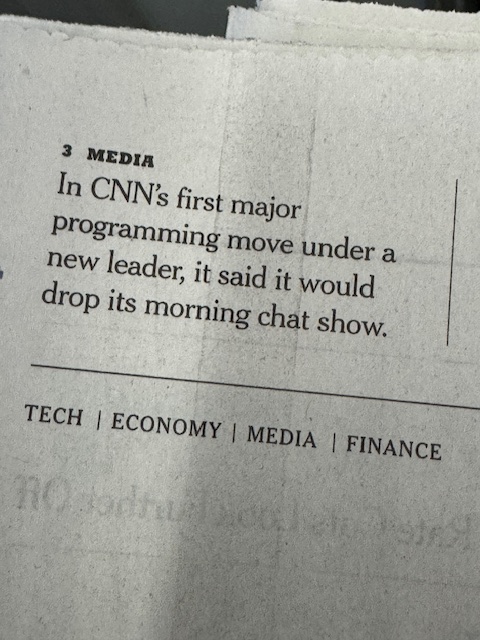
In this case, substituting the British “chat show” for the American “talk show” isn’t especially clever. It doesn’t even save any space in the headline. Possibly the term was meant as a criticism for the show in question, but as I’ve never watched it or otherwise heard of it, I can’t really say.
 notoneoffbritishisms.com
I think there is more to the verb ‘to swan’ than the OED definition Ben cites: “To move about freely or in an (apparently) aimless way.”
My experience of British usage has the nuance of moving serenely and behaving flamboyantly.
Chambers Dictionary has: “to spend time idly; to wander aimlessly or gracefully • justs swans off whenever she feels like it • swans around in his Armani suit.
Google/Oxford Languages Dictionary has:
…move about or go somewhere in a casual, irresponsible, or ostentatious way.”swanning around Europe nowadays are we?”
I agree with Nick completely. Lots of British people I know– including my wife– use it as a negative comment or even an insult for people who are “gallivanting” while others labor or at least make themselves useful. There is definitely a sense that the person who swans about thinks s/he is better than everyone else or too important to help out.
Yes, absolutely.
I can’t imagine the oh-so-politically-correct BBC paying to have this made nowadays. In it’s day, I was about 8 and laughed for all the wrong reasons; now I smile to see Graham Chapman and Terry Jones (no longer with us) once again. And I rejoice that this historical document to the casual, jocular sexism of a bygone age can remain on YouTube without the cancellation squad rewriting history to pretend such things never happened.
Monty Python – Close Order Swanning About https://www.youtube.com/watch?v=fUhl_QAk6mY
This sketch was the first thing I thought of.
I agree that it usually implies more and has a certain air about it – a touch of insouciance, showiness or indulgent irresponsibility. I’ve never heard ‘swan’ used as in the New York Times headline: as Chambers notes, “colloq usually swan off, around, about, etc”. I wouldn’t say “He swans” or “She was swanning”; without off, etc.
Ditto. I can barely parse the headline. You simply can’t use “swan” as a verb by itself.
The best parts of any chat/talk show are viewed internationally on various platforms, so I think viewers will be familiar with both terms. I was amused by the assumption that using a British term means one is trying to “be clever” – perhaps that’s American insecurity 😂