

William Grimes is a New York Times writer, Facebook friend, and language curmudgeon. A while back, combining the last two identities, he complained about Americans’ use of the adjectival “eye-watering.” I was unfamiliar with the expression and, needless to say, looked into it.
The story is a bit complicated. The OED has three separate definitions for “eye-watering” and (in my opinion) misses out on a fourth meaning. The first is, simply, “Having eyes which are watering,” and it doesn’t seem to favor a specific nationality. The dictionary’s first citation is from the North Wales Chronicle in 1874 (“A few days ago I left Edinburgh, a shaky, wheezing, snivelling, eye-watering, bronchial body”) and the second is from the New York Times in 1933 (“Dr. Gay had not found out more than any sneezing, eye-watering victim of hay fever already knows”).
The second meaning, also literal and agnostic as to nationality, describes something that causes the eyes to water, to wit:

The third and last sense is figurative. The OED defines it as, “That inspires a strong emotional response; astonishing, exciting, shocking, etc. Now: esp. (of a figure or amount) extremely high or large; staggering,” and says it is “originally U.S.” That’s presumably because of its first citation, from an Ohio newspaper in 1950: “Are you looking for a new refrigerator..? We’ve got eyewatering prices. Wow!”
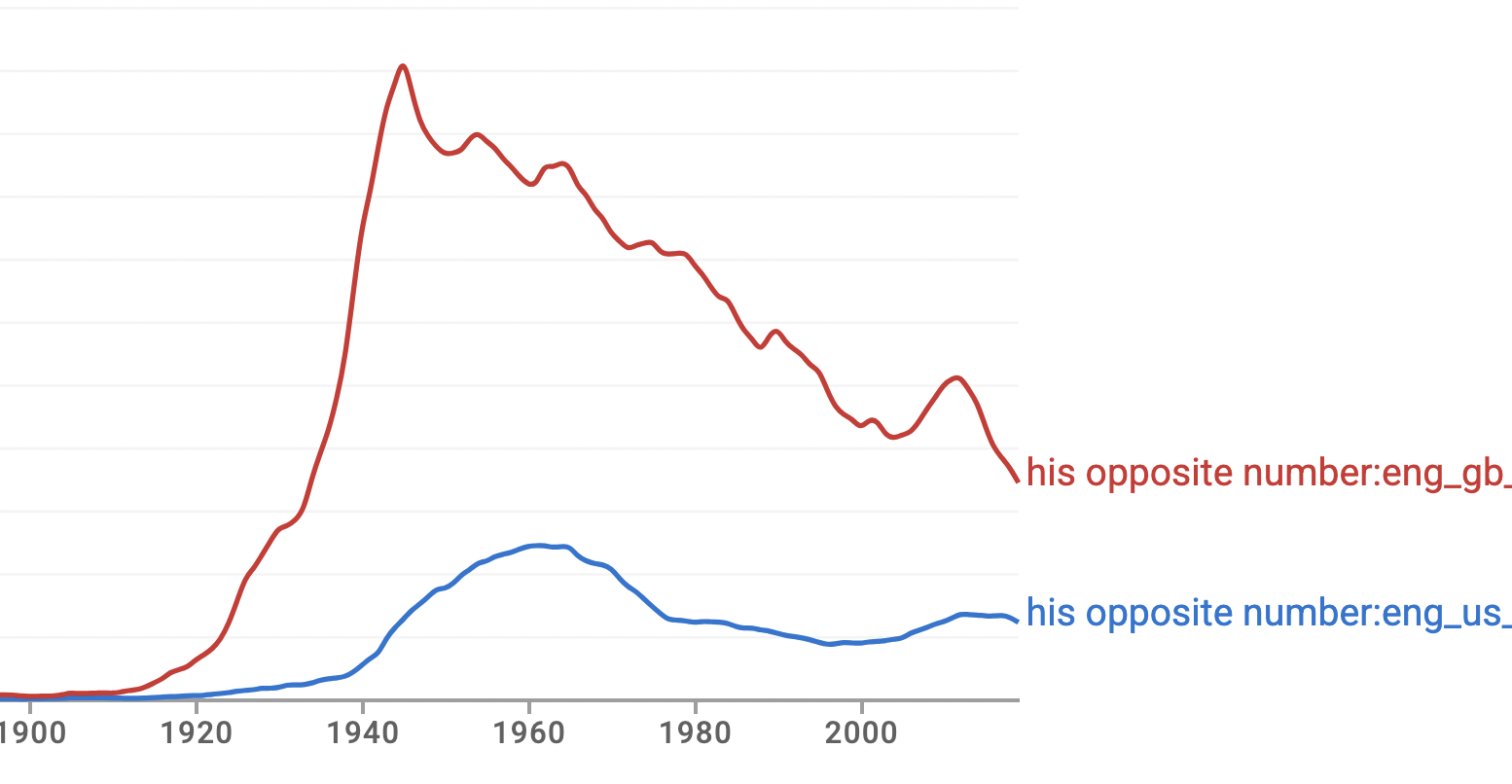
But I’ve got to think that is an outlying one-off. As evidence, I offer this graph from Google Ngram Viewer:

That is, it really developed as a catch-phrase in Britain in the late 2000s, then slowly started taking hold in America. But William Grimes’s former employer is ahead of the curve. Just two days ago (April 14, 2025), the phrase appeared twice in the Times. One article noted, “Amid a spat with China, Mr. Trump raised tariffs on Chinese imports last week to an eye-watering minimum of 145 percent,” and another referred similarly to “eye-watering tariffs.” All told, “eye-watering” has been used used sixty-four times in the Times since the start of 2024 (admittedly a good number in English football/soccer coverage from The Athletic).
Two other examples from 2024:
- “Behind the dearth of elevators in the country that birthed the skyscraper are eye-watering costs.”
- “I have more than 50,000 pictures stored in Google Photos—over 700 of them taken in the first three months of this year alone. These photos, which take up an eye-watering 44 GB of storage space…”
I mentioned my opinion that the OED has neglected a fourth meaning. It’s an extension of “mouth-watering,” as in something imagined to be delicious; thus, “eye-watering” can mean very pleasing to the eye. I would say this applies to the 1950 refrigerator ad, as well as these two quotes from Times ballet and theater reviews, from 1973 and 2005, respectively.
- “[Patricia] McBride provided one of the very few memorable moments of 1973 when, radiating delicious and seductive opulence in an eye‐watering red gown, she was the center of attention in Jerome Robbins’ “An Evening’s Waltzes.”
- “This peculiar news serves as an apposite coda to a season in which much of the dancing on Broadway was probably more fun to do than to watch, those eye-watering splits from the acrobatic beauties in ‘La Cage aux Folles’ definitely excepted.”
But I don’t expect the OED to recognize this, so established has the staggeringly high figure or price meaning become–in Britain and now, America.








 notoneoffbritishisms.com