

Journalist Nico Hines of the Times of London recently informed me that snarky is a NOOB. This surprised me, as I had always assumed–without really thinking about it–that the term for a certain kind of glib sarcastic negativity, endemic to the the internet, was a recent American coinage, possible derived in a roundabout way from Lewis Carroll’s 1876 poem “Hunting of the Snark.” But Nico was correct.
The term was apparently first used in the New York Times in 1995, in a reference to “snarky put-downs and the fever for electronic communiques” (quaint phrase, that, dating from the dawn of e-mail). That quote does not appear in the Times’ online archive (presumably due to copyright issues) but the redoubtable William Safire referred to it the following year while noting the “growing use” of snarky. He said he was “reluctant” to attribute this to Carroll, noting that ten years before the poem, the British publication Notes and Queries referred to “a certain kind of snarking or gnashing.” He went on:
In his 1976 diaries, Richard Crossman, a [British] Cabinet minister, used the word to describe a journalistic tone in the sense that snarky is currently used in the White House to deal with some of us who observe the passing political scene: ‘The stream of anti-government propaganda, smearing, snarky, derisive, which comes out of Fleet Street.”
The OED contends the word derives from snork, meaning snore or snort. The dictionary cites Jessie Vaizey’s 1913 (British) novel College Girl: “‘Why should you think I am “snarky”?’ ‘Because—you are! You’re not a bit sociable and friendly.’” Wonderful quote: the title of the novel suggests the “crowd” that used the word, the end of the line of dialogue suggests a definition (not sociable, not friendly), and the quotation marks suggest that in 1913 it was slang of fairly recent vintage.
American use came a bit earlier than that 1995 Times quote. In 1970, Billboard called Roberta Flack’s song “Reverend Lee” “an amusing, slightly snarky slam at Southern Baptist morals.” And Marilyn French (a Harvard PhD who wrote her dissertation on James Joyce) wrote in The Women’s Room (1977):
Bliss turned with a snarky smile. “Thanks. Paul thinks so too, I guess. He asked me to go to the Bahamas with him. Some lawyers’ conference. Think I should go?” Mira had learned enough sophistication to be able to play the snarky game.
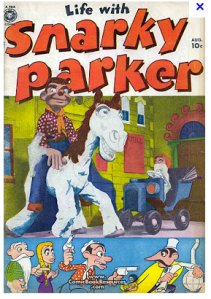
Google Ngrams show interesting patterns in British and American use of snarky. In the U.K., it was an available but rarely used term through the twentieth century, and rapidly rose in popularity from 1998 to the present. In the U.S., it was hardly ever used (most references are to a mid-century puppet character called Snarky Parker) until 1990, when it went through the roof.
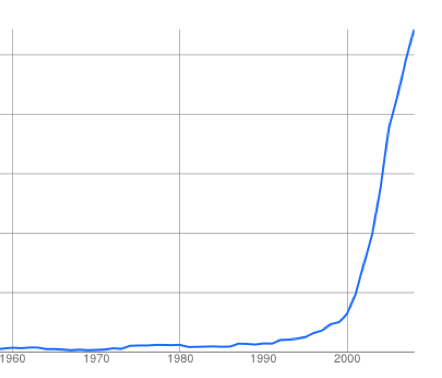
So snarky is number one with a bullet among both peoples, but note this: the Ngrams show that as of 2008 (the most recent year for which figures were available), it was about ten times more commonly used in the U.S. than the U.K. What does that prove? If your answer is that a country gets the words it deserves, you will get no argument from me.



 notoneoffbritishisms.com